
Cladding – give tired walls a fresh, weatherproof finish (without guessing what you need)
Maybe your house still has old pebbledash.
Maybe the timber cladding is rotten and flaking.
Maybe you just want the place to look smarter and more modern from the street.
The big questions are usually:
- Do I repair, repaint or re-clad?
- What’s the difference between uPVC, fibre cement, timber and composite cladding?
- Will cladding help with damp, drafts or insulation – or just appearance?
- How much disruption and cost should I realistically expect?
This page walks you through how Uprise Roofing approach wall and gable cladding, so you can decide what’s right for your home and budget without a hard sell.
Thinking about cladding or re-cladding part of your home?
Call 0203 822 0300 or email info@uprise-roofing.co.uk with a few photos of the areas you’re thinking about.

Do I need new cladding – or can I just repair or paint?
You don’t always have to rip everything off and start again. Sometimes a repair, tidy-up or repaint is enough.
A repair or repaint might be enough if:
- The existing cladding is structurally sound (no major rot or movement)
- Only small areas are damaged, cracked or weathered
- You’re happy with the overall look, but it just looks tired
- You’re working to a tight budget and need a short-to-medium-term solution
In those cases, we’ll talk honestly about:
- Localised repairs (replacing damaged boards or trims)
- Whether a good prep and repaint is sensible
- How long that’s realistically likely to last before you’re back in the same place
Full or partial re-cladding makes more sense if:
- Timber cladding is rotten, soft, split or warped in multiple areas
- Existing uPVC or other cladding is cracked, faded or poorly fitted
- The property looks mismatched from previous patch jobs
- You want to change the look of the house
- You’re planning other external works and want to do it properly once
On a visit, we’ll show you photos of what we find and lay out both sides: repair/repaint versus re-cladding, including cost and lifespan.
Cladding options – what can you actually choose from?
Most domestic cladding we install falls into three main categories:
1. uPVC cladding
Best for: Low-maintenance upgrades, smartening up tired walls or gables at a sensible price.
- Low maintenance – won’t need regular painting
- Available in white, greys, blacks and woodgrain finishes
- Works well on gable ends, dormers, porch fronts, garages and upper-storey walls
- Easy to clean down with soapy water
Things to be aware of:
- It’s still plastic – quality and appearance vary between products
- On some properties you may prefer the look of fibre cement or timber-effect options
2. Fibre cement / composite cladding
Best for: A more “high-end” modern look with excellent durability.
- Boards made from fibre cement or composite mixes
- Available in a wide range of colours and profiles
- Very stable, won’t warp like some timbers can
- Good long-term resistance to UK weather when installed correctly
Things to be aware of:
- Higher upfront cost than basic uPVC
- Needs careful detailing and installation to look its best
3. Timber cladding
Best for: Traditional or character properties where a natural finish is important.
- Can look fantastic on the right house
- Can be painted or stained in different finishes
- Works well on cottages, period properties and certain extensions
Things to be aware of:
- Needs ongoing maintenance (painting/staining)
- Poor detailing can lead to rot, movement and future issues
- Long-term cost can be higher when you factor in maintenance
When we visit, we’ll talk through what will suit your house style, how much maintenance you want, and what your budget and timescales look like.
Then we’ll make a recommendation you can sense-check, rather than dropping you into a catalogue and leaving you to guess.
Will cladding help with damp, drafts or insulation?
Cladding can help with weather protection – but it’s not magic.
Where cladding does help
- Protects the underlying wall or structure from direct weathering
- Can improve resistance to driven rain and wind on exposed gables and upper floors
- When combined with appropriate build-up, it can help reduce cold bridging and drafts in certain constructions
Where it won’t fix the problem on its own
- Internal condensation and mould caused by lifestyle or lack of ventilation
- Serious rising damp or issues coming from below ground level
- Structural problems or water ingress from other sources such as failed gutters, leaking roofs or cracked render behind
On a survey we’ll always look for the actual source of damp or staining first. If cladding will help, we’ll say so. If your main issue is something else, we’ll explain that too so you’re not paying for the wrong solution.
What does a typical cladding job involve?
Every property is different, but a typical re-cladding project usually includes:
- Initial assessment
- Looking at existing finishes
- Checking for obvious damp, movement or structural issues
- Taking measurements and photos
- Discussing design and materials
- Agreeing which walls or sections will be clad
- Talking through colour, profile and material options
- Confirming any insulation or build-up requirements
- Preparation work
- Carefully removing old cladding where needed
- Addressing any obvious defects
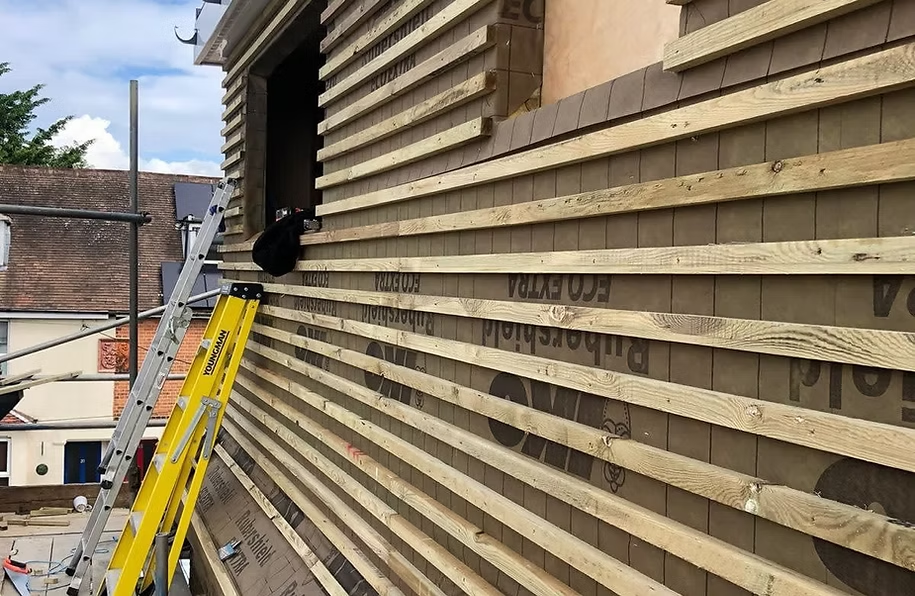
- Setting out battens and ventilation gaps correctly
- Installing the new cladding
- Fixing battens and support framework
- Fitting boards to manufacturer guidelines
- Neat detailing around windows, corners, eaves and junctions
- Finishing touches and tidy-up
- Sealing where appropriate
- Cleaning down the work area
- Removing waste and old materials
You’ll be kept in the loop on timings, access, and what to expect in terms of noise and disruption.
How much does cladding cost?
Cladding costs vary depending on:
- The area to be covered
- How many windows, corners and details are involved
- The material chosen
- Access requirements such as scaffolding or towers
- Preparation work and what needs making good
We’ll always:
- Measure properly
- Break your quote down so you can see materials, labour and access
- Make it clear what’s included and what isn’t
If you send a couple of photos and a rough idea of which walls you’re thinking about, we can often give a ballpark range before visiting – then confirm with a detailed quote.
How Uprise Roofing keep cladding projects straightforward
- Straight answers – If we think you’d be better off repairing or repainting for now, we’ll say so.
- Photos and explanations – We show you what we’re working with and why we’re recommending certain options.
- No surprise extras – If we think there’s a risk of hidden issues, we’ll flag that up front.
- Local, family-run – We rely on reputation and word-of-mouth, so bodging a quick job and disappearing isn’t an option.
Want to find out what your options are?
Is cladding the right move for your home?
If you’re looking at tired pebbledash, flaking timber or dated boards and wondering what to do, the next step is simply to get some clear options.
- Call 0203 822 0300
- Or email info@uprise-roofing.co.uk with your address and a few photos of the areas you’re thinking about
Tell us what you’d like to change – the look, the maintenance, or both – and we’ll help you decide whether cladding, repair, repaint or a mix makes the most sense for your home and budget.