
Flat roofing – which option is best for your home?
If you’ve got a flat roof on an extension, garage or dormer that’s leaking, bubbling or just looking tired, it can be hard to know what to do next.
-
Do you repair what’s there or replace it?
-
Should you choose felt, EPDM rubber or GRP fibreglass?
-
How long should a new flat roof actually last?
-
What does a sensible, fair price look like?
This page walks you through the options in plain English so you can decide what’s right for your home and your budget.
Want to talk it through with a roofer?
Call 0203 822 0300 or email info@uprise-roofing.co.uk with a few photos of your flat roof.
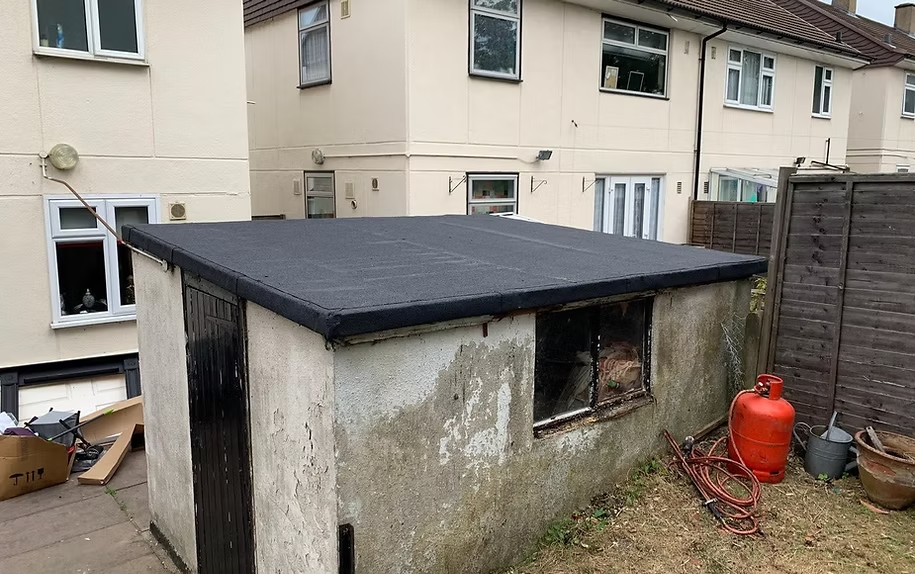
How do I know if my flat roof needs replacing?
Not every flat roof leak needs a full replacement. Common signs that something’s wrong include:
- Ponding water that sits on the roof for days after rain
- Blisters or bubbles under the surface
- Cracks, splits or bald patches in the felt
- Loose or perished edges where the roof meets walls, upstands or trims
- Stains or damp patches inside, under the flat roof area
- A roof that’s simply at the end of its expected lifespan
When a repair might be enough
A repair could be sensible if:
- The roof is generally sound and under 10–15 years old
- The problem is localised (e.g. around a pipe, corner or joint)
- There’s one obvious crack, hole or damaged area
In these cases, we’ll aim to:
- Find the root cause (not just the symptom)
- Carry out a targeted repair using compatible materials
- Explain realistically how long that repair is likely to last
When a full replacement is worth considering
A replacement is usually better value if:
- There are multiple leaks in different areas
- The surface is covered in blisters, cracks or crazing
- The roof has already had lots of patches and still leaks
- The structure or decking beneath is soft or rotten
- You want to upgrade insulation at the same time
On a survey, we’ll show you photos of what we find and talk you through both options where possible: cheapest safe repair vs best long-term solution.
Flat roofing options – felt vs EPDM vs GRP
Most homeowners ask the same question: “Which flat roofing material is actually best?”
The truth is, it depends on the roof and what you want from it.
Modern felt systems
Modern torch-on or heat-welded felt systems are much more advanced than old pour-and-roll felt.
Pros:
- Proven, long-term solution for many types of flat roof
- Great for simple shapes and straightforward access
- Can be cost-effective compared with some alternatives
- Multiple layers for extra protection
Things to be aware of:
- Requires experienced installers for a safe, neat finish
- Not always best for extremely complex shapes or lots of detailing
- Typically a shorter lifespan than GRP or quality EPDM, depending on product and installation
EPDM rubber roofs
Single-ply rubber roofs are popular on domestic extensions and garages.
Pros:
- Supplied in large sheets – often fewer joins
- Flexible and good for certain awkward shapes
- Generally low-maintenance
- Good lifespan when properly installed
Things to be aware of:
- Can look industrial if detailing isn’t done neatly
- Needs the right trims and detailing around edges and penetrations
- Not all EPDM products are equal
GRP (fibreglass) flat roofs
GRP roofs are built in layers on site, forming a rigid, seamless shell.
Pros:
- Seamless finish
- Excellent for complex shapes, upstands and details
- Can be supplied in different colours and non-slip finishes
- Very long lifespan when installed correctly
Things to be aware of:
- Installation is weather-sensitive
- The deck must be sound and suitable
- Usually more labour-intensive than some alternatives
When we survey your roof, we’ll explain which system makes most sense for your specific roof, including the pros, cons and likely lifespan of each.
How much does a flat roof cost?
Flat roofing costs vary, but the main things that drive price are:
- Size of the roof
- Material chosen – felt, EPDM or GRP
- Condition of the decking and structure underneath
- Whether we are adding or upgrading insulation
- Complexity – skylights, pipes, multiple levels, awkward access
- Need for scaffolding or special access equipment
To keep things clear, we’ll separate your quote into preparation/removal, decking and insulation where applicable, the roofing system, trims and detailing, and any required access or scaffolding.
If you share photos and rough dimensions, we can often give you a ballpark range before visiting – then confirm with a proper survey and fixed quote.
Do I need insulation with my flat roof?
This is a common question, especially on kitchen or extension roofs that get very hot in summer and cold in winter.
Warm roof
- Insulation goes on top of the deck, under the waterproofing
- Helps keep the room below warmer in winter and cooler in summer
- Reduces condensation risk
- Often the preferred approach for modern flat roofs
Cold roof
- Insulation sits between the joists below the deck
- Can be harder to ventilate properly
- More prone to condensation issues if not done correctly
We’ll assess the existing build-up, signs of damp and any relevant building regulation requirements, then explain the impact on comfort, cost and compliance.
What happens if I ask Uprise Roofing to look at my flat roof?
1. Initial conversation
Tell us where the roof is, what problems you’re seeing and how long it has been happening. Photos help us judge whether it sounds like a repair or replacement job.
2. On-site survey
We check the surface, trims and edges, drainage and falls, decking, signs of damp and any underlying issues. We take clear photos or video.
3. Options & quote
You receive a plain-English explanation, options where possible, and a clear itemised quote. No pressure and no “today only” discounts.
4. Installation
If you go ahead, we agree dates, arrange access, protect the site, strip old coverings if required and install the new system to manufacturer guidance.
5. Handover & aftercare
We explain what was done, show photos of hidden layers where available, provide warranty documentation and basic maintenance advice.
Flat roofing FAQs
Can you just overlay my existing flat roof?
Sometimes, but only if the existing surface and deck are sound and suitable.
How long does a new flat roof last?
It depends on the system and installation. Modern felt, EPDM and GRP systems are all designed for many years of service when correctly installed and maintained.
Do I need planning permission?
Many like-for-like replacements fall under permitted development, but changes in height, structure or drainage can bring other rules into play.
Will a new flat roof reduce noise and heat loss?
Upgrading insulation and the roof build-up can make the room more comfortable and quieter.
Want to know what makes sense for your flat roof?
Whether you’ve got a small garage roof that keeps leaking or a large extension that needs a full upgrade, we’ll help you understand your options before you spend a penny.
Call 0203 822 0300 or email info@uprise-roofing.co.uk with your details and photos.